
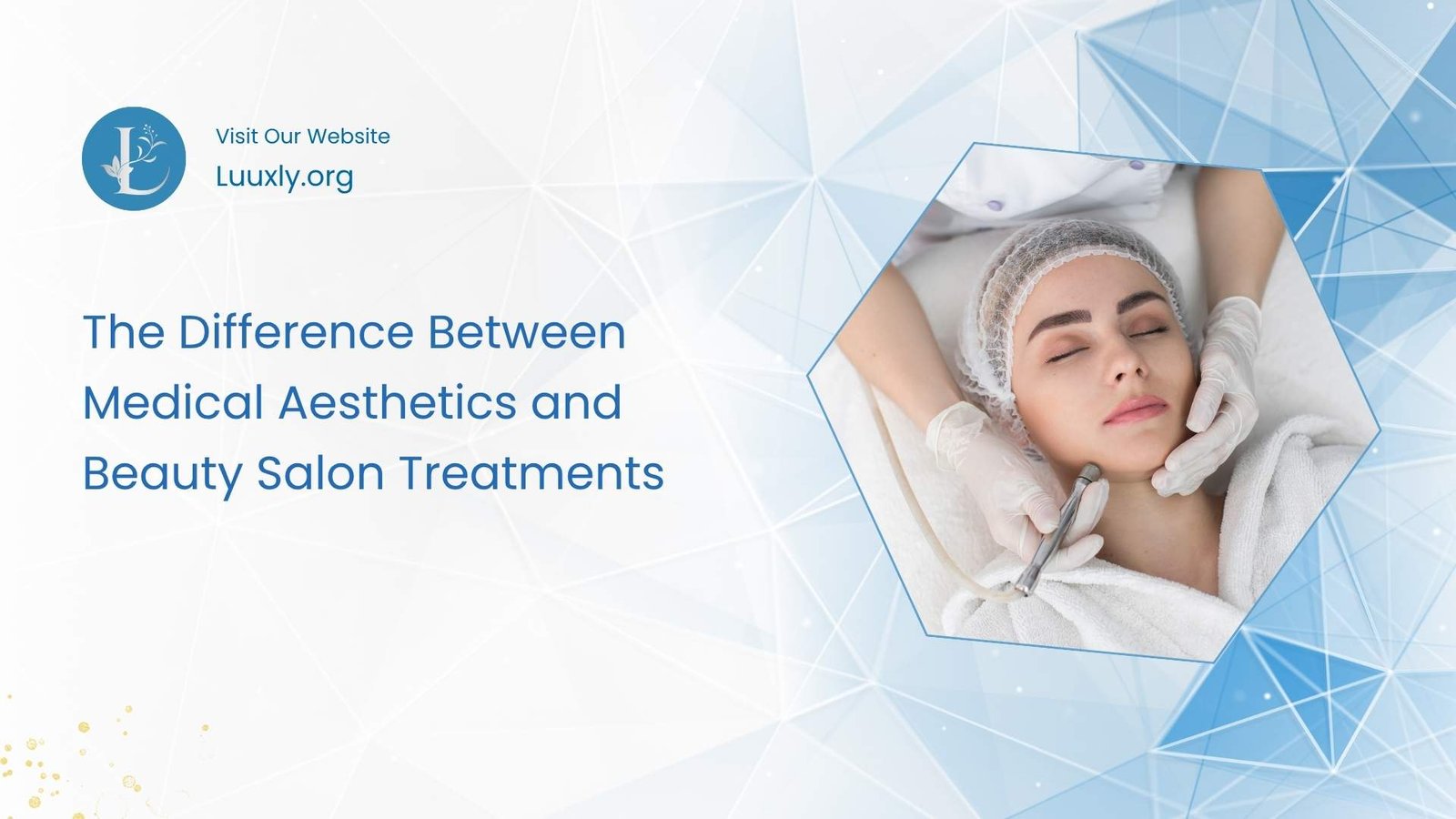

To an outside observer, beauty salons and medical aesthetic clinics aren’t all that different. They both have “treatment” options for skin, they both (ostensibly) make people look better and they both cost money. However, the actual differences between these two services matter in terms of safety, results and accurate expectations.
Knowing what differentiates medical aesthetics from salon treatment can help determine which provider is best for what someone truly needs.
Training and Qualifications
Medical aesthetics are performed by doctors, nurses and other healthcare professionals who have medical training and degrees. These professionals understand facial anatomy, complications that could arise and how to react should a medical incident occur.
Beauty therapists receive training in cosmetic approaches but no medical degree. They’re schooled in skin care and massage and application – as is relevant to their field – but without any medical component of a physician.
This matters because the more trained someone is to know about complications and anatomy beneath the skin, the more access they have to offer these services legally. The right practitioners in a clinic like BLC Aesthetics can know about vascular systems and deeper structures of the skin – where medical complications might arise – to provide appropriate medical assessments. Beauty therapists are not privy to this information.
Treatment Types and Depth
Beauty salons operate on the surface of the skin. Facials, microdermabrasion, superficial peels and cosmetic application tackle the top layer without intrusiveness and significant biological changes.
Medical aesthetics go beneath the surface. Injectable treatments, prescription facial peels, laser work and medical applications delve into greater depths that require anatomical assessments and understandings.
Depth of penetration isn’t simply a matter of professional presentation but a legal requirement. Certain treatment components are legally deemed a medical procedure, meaning only those qualified can provide the service. Beauty salons that do so without the legal implication are operating subversively.
Products and Equipment
Medical aesthetic clinics utilize prescription strengths and medical grade apparatus’ when providing their treatments. This means that the products have greater concentrations of active ingredients and the machines operate at a capacity that requires medical oversight.
Beauty salons use cosmetic strengths and machines for surface level treatment. These are more gentle, less concentrated and mean to be used by someone without any technical expertise.
Strength of product potentially comes with serious effects – which explains why many medical-grade treatments work better faster; however, there’s more risk if administered improperly, which is why practitioners need to be medically supervised.
Safety Protocols and Oversight
Medical aesthetic clinics operate under the health regulations of the larger industry. They have sterile rooms, attempt infection control and have emergency resources available. Practitioners must be up to date on certifications for continuing education as well as scope of practice.
Beauty salons operate under hygiene standards that are less than medical care standards. They’re not equipped to handle something medical because they’re not doing something that’s expected to be so.
The differentiation provides accountability should something go wrong. Medical practitioners must practice to healthcare standards or else face consequences in their chosen field. The same oversight does not exist for beauty industry practitioners.
Consultation and Assessment
Medical aesthetics require a consultation involving health history, medication assessments and treatment suitability based on the practicality of medical realities. Practitioners need to gauge if someone would be an appropriate candidate based on co-morbid conditions, certain medications or achievable results.
Beauty salons need to provide a consultation based on aesthetics alone; a skin type explanation for cosmetic intention is warranted but not a health necessity since those are not medical proceedings available.
Again this makes sense: Only depth of concern might require medical intervention; cosmetic considerations need only consideration relative to that purpose, not mixed messages through standards bringing safety into question.
Results and Expectations
Results from medical aesthetics tend to be more pronounced; they’re working at a greater depth with stronger solutions. While results appear after surgery in more harsh situations – and costs match this elevated investment – as does recovery time also more enhanced when prescribed results longer lasting, with medically viable products.
A salon might provide relative results based on surface appeal; smaller, gentler action-oriented without a second thought toward stress and time period recovery since applied results can be relatively minor in scope and patient expectations.
Neither option is necessarily better than the other – but they’re tailored toward different goals. What matters is finding an appropriate approach based on what each person actually needs.
Cost Considerations
All things considered, medical aesthetics are going to cost more because they’re provided by trained professionals with access to prescription products and advanced medicine applied in specialized settings. Pricing is reflective of treatment concern but also all levels of safety.
Beauty salons will cost less because there’s less overhead and less required education that applies in one compared to the other; for any treatment on a surface level merely focusing on cosmetic elements alone, this makes sense.
The issue arises when people try to save money without concern over what’s best for them practically. Cheaper is not better if it’s a treatment that’s more expensive because it’s worth it – but it might not be what’s actually needed.
When Each Makes Sense
Beauty salons make sense when routine skincare maintenance, relaxation-focused and light cosmetic applications are needed. Those looking for gentle results without involving additional professionals make sense here.
Those looking for stronger solutions that need to be focused purposes greater than what cosmetically achieved with lackluster efforts should turn to medical aesthetics for enhanced results, longer-lasting approaches or a situation requiring prescribed treatment or intervention.
How To Make The Best Decision
Making the decision should based on treatment goals – if it’s purposeful maintenance, there’s no need for medical intervention. If it’s a far deeper concern or needed transformative approach, then medical solutions are appropriate.
Qualifications also mean everything, however. It doesn’t matter if someone is in either avenue; what matters is knowing who’s properly suited to do what responsibly so as not to open anyone up to risks beyond what any trained professional can actually do themselves – whether from a salon offering an aesthetic practice or someone without any qualifications claiming themselves a master in the field.
It’s not that one is better than the other but an appropriate treatment response matched with appropriate qualified practitioner in an acceptable setting for what those needs truly are.