
Introduction to Geometry Spot
Geometry Spot has become a popular term among students, teachers, and parents looking for engaging ways to learn mathematics online. Whether you are struggling with geometric concepts, preparing for exams, or simply looking for interactive educational resources, Geometry Spot offers a unique approach to understanding geometry in a fun and accessible way.
Geometry is one of the most important branches of mathematics. It focuses on shapes, sizes, angles, dimensions, and the relationships between different objects in space. While many students find geometry challenging, platforms and resources associated with Geometry Spot help make learning easier through interactive tools, games, visual examples, and educational content.
In this comprehensive guide, we will explore what Geometry Spot is, its features, benefits, learning opportunities, and why it has gained popularity among students worldwide.
What Is Geometry Spot?
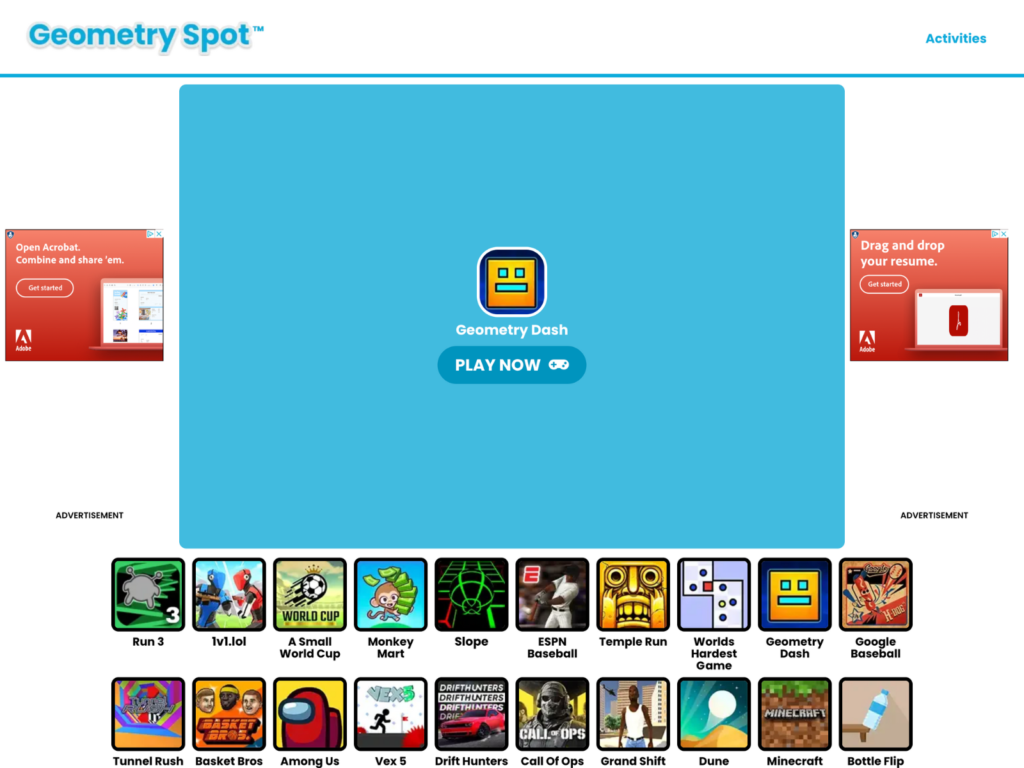
Geometry Spot is generally known as an online educational resource that helps students explore geometry concepts through interactive activities, games, lessons, and mathematical exercises. It aims to simplify complex geometric ideas and make learning more enjoyable.
Unlike traditional learning methods that rely heavily on textbooks and memorization, Geometry Spot often emphasizes visual learning and practical applications. This approach helps students understand mathematical concepts more effectively.
The platform or concept is especially appealing to:
- Middle school students
- High school students
- Teachers
- Homeschool educators
- Parents supporting their children’s education
By combining educational content with interactive experiences, Geometry Spot creates a learning environment that feels less intimidating and more engaging.
Why Geometry Is Important
Before diving deeper into Geometry Spot, it’s important to understand why geometry matters.
Geometry plays a significant role in everyday life. It helps us understand the physical world and contributes to various professions, including:
Architecture
Architects use geometric principles to design buildings, bridges, and structures.
Engineering
Engineers rely on geometry when creating machines, vehicles, and infrastructure projects.
Computer Graphics
Video game developers and graphic designers use geometry to create digital environments and animations.
Navigation
GPS systems and mapping technologies depend on geometric calculations.
Art and Design
Artists and designers use geometric patterns and shapes to create visually appealing works.
Because geometry is so widely applied, developing strong geometric skills can benefit students academically and professionally.
Key Features of Geometry Spot
Geometry Spot stands out because of its educational and interactive features.
Interactive Learning Tools
One of the biggest advantages is the use of interactive learning tools. Students can manipulate shapes, measure angles, and visualize geometric relationships in real time.
Interactive learning often leads to:
- Better understanding
- Improved retention
- Increased engagement
- Faster problem-solving skills
Educational Games
Many Geometry Spot resources include educational games designed to reinforce learning.
These games help students practice:
- Shape recognition
- Angle calculations
- Area and perimeter
- Coordinate geometry
- Spatial reasoning
By turning lessons into games, students remain motivated and interested in learning.
Visual Demonstrations
Geometry is a highly visual subject. Geometry Spot often uses diagrams, illustrations, and animations to explain concepts clearly.
Visual demonstrations help students understand:
- Triangles
- Circles
- Polygons
- Transformations
- Symmetry
- Three-dimensional figures
Practice Exercises
Practice is essential for mastering mathematics.
Geometry Spot frequently provides:
- Worksheets
- Quizzes
- Challenges
- Interactive exercises
Regular practice helps students build confidence and improve performance in school.
Topics Commonly Covered in Geometry Spot
Geometry Spot resources typically cover a wide range of geometric concepts.
Points, Lines, and Planes
These are the foundational elements of geometry.
Students learn:
- What points represent
- Types of lines
- Line segments
- Rays
- Plane geometry basics
Angles
Understanding angles is a core geometry skill.
Common angle topics include:
- Acute angles
- Right angles
- Obtuse angles
- Straight angles
- Complementary angles
- Supplementary angles
Triangles
Triangles are among the most important geometric shapes.
Students explore:
- Equilateral triangles
- Isosceles triangles
- Scalene triangles
- Triangle theorems
- Pythagorean theorem
Circles
Circle-related lessons often include:
- Radius
- Diameter
- Circumference
- Area
- Arcs
- Chords
Polygons
Geometry Spot helps students understand:
- Quadrilaterals
- Pentagons
- Hexagons
- Octagons
- Regular polygons
Transformations
Students learn how shapes change through:
- Translation
- Rotation
- Reflection
- Dilation
Coordinate Geometry
Coordinate geometry combines algebra and geometry.
Topics may include:
- Graphing points
- Distance formula
- Midpoint formula
- Slope calculations
Solid Geometry
Three-dimensional geometry covers:
- Cubes
- Cylinders
- Cones
- Spheres
- Prisms
- Pyramids
Benefits of Using Geometry Spot
Geometry Spot offers several educational benefits.
Makes Learning Fun
Traditional math lessons can sometimes feel repetitive. Geometry Spot introduces engaging activities that make learning enjoyable.
Students are more likely to stay focused when lessons include interactive elements and games.
Improves Understanding
Visual and interactive tools help students grasp difficult concepts more quickly.
Rather than memorizing formulas, students can see how geometric relationships work in practice.
Encourages Independent Learning
Many Geometry Spot resources allow students to learn at their own pace.
This flexibility is especially useful for:
- Self-study
- Homework support
- Exam preparation
Supports Different Learning Styles
Every student learns differently.
Geometry Spot accommodates:
- Visual learners
- Kinesthetic learners
- Logical learners
- Independent learners
Builds Confidence
As students complete exercises and solve problems successfully, their confidence in mathematics grows.
Confidence often leads to better academic performance.
Geometry Spot for Teachers
Teachers can also benefit significantly from Geometry Spot resources.
Classroom Activities
Interactive geometry tools can be integrated into classroom lessons to increase student participation.
Lesson Planning
Teachers can use geometry-based content to create more engaging lesson plans.
Assessment Tools
Quizzes and exercises help teachers evaluate student understanding.
Student Engagement
Gamified learning experiences often improve classroom engagement and motivation.
Geometry Spot for Parents
Parents looking to support their children’s education may find Geometry Spot extremely valuable.
Benefits include:
- Extra practice opportunities
- Homework assistance
- Educational entertainment
- Skill reinforcement
Parents can encourage children to explore geometry concepts outside the classroom in a more relaxed environment.
Tips for Success When Using Geometry Spot
To maximize learning outcomes, students should follow these best practices.
Practice Regularly
Consistency is key in mathematics.
Even 15 to 20 minutes of daily geometry practice can lead to significant improvement.
Focus on Understanding
Rather than memorizing formulas, try to understand why formulas work.
Conceptual understanding creates stronger long-term learning.
Use Visual Learning Techniques
Draw diagrams whenever possible.
Geometry becomes easier when concepts are visualized.
Challenge Yourself
Don’t stick only to easy problems.
Attempt more difficult exercises to strengthen critical thinking skills.
Review Mistakes
Mistakes are valuable learning opportunities.
Analyze incorrect answers and identify areas for improvement.
Common Challenges in Geometry
Despite its benefits, geometry can present challenges.
Visualization Difficulties
Some students struggle to imagine shapes and spatial relationships.
Interactive tools can help overcome this obstacle.
Memorizing Formulas
Geometry includes many formulas for area, volume, and circumference.
Understanding the logic behind formulas makes them easier to remember.
Complex Proofs
Geometric proofs require logical reasoning and step-by-step thinking.
Regular practice can improve proof-writing skills.
Coordinate Geometry
Combining algebra and geometry can be challenging for some learners.
Breaking problems into smaller steps often helps simplify the process.
The Future of Geometry Learning
Technology continues to transform education.
Future geometry learning may include:
Artificial Intelligence
AI-powered tutors can provide personalized guidance and instant feedback.
Virtual Reality
Students may explore geometric concepts in immersive 3D environments.
Augmented Reality
AR applications can bring geometric shapes into the real world through mobile devices.
Adaptive Learning
Advanced educational systems can adjust lesson difficulty based on student performance.
Geometry Spot and similar platforms represent an important step toward the future of interactive education.
Why Geometry Spot Continues to Grow in Popularity
Several factors contribute to Geometry Spot’s increasing popularity.
These include:
- Easy accessibility
- Interactive learning experiences
- Educational games
- Visual explanations
- Student-friendly design
- Flexible learning opportunities
As digital education becomes more common, resources like Geometry Spot are likely to attract even more users.
READ MORE:
MyBettingEdge: A Complete Guide for Sports Betting Enthusiasts
Conclusion
Geometry Spot has emerged as a valuable resource for students, teachers, and parents seeking a more engaging way to learn geometry. By combining educational content with interactive tools, games, visual demonstrations, and practice exercises, it helps transform a traditionally challenging subject into an enjoyable learning experience.
Whether you’re studying angles, triangles, circles, coordinate geometry, or three-dimensional shapes, Geometry Spot offers opportunities to strengthen mathematical understanding and improve problem-solving skills. As technology continues to shape education, platforms like Geometry Spot will play an increasingly important role in helping learners succeed.
For students looking to build confidence in mathematics and develop a deeper understanding of geometric concepts, Geometry Spot serves as an excellent starting point on the journey toward academic success.
Frequently Asked Questions (FAQ) About Geometry Spot
1. What is Geometry Spot?
Geometry Spot is an educational platform or resource that helps students learn geometry through interactive lessons, games, practice exercises, and visual learning tools.
2. Is Geometry Spot free to use?
Many Geometry Spot resources are available for free. However, access to certain features may depend on the specific website or educational platform being used.
3. Who can use Geometry Spot?
Geometry Spot is suitable for students, teachers, parents, homeschool educators, and anyone interested in improving their geometry skills.
4. What subjects does Geometry Spot cover?
Geometry Spot primarily focuses on geometry topics such as angles, triangles, circles, polygons, coordinate geometry, transformations, and three-dimensional shapes.
5. How does Geometry Spot help students learn?
It uses visual explanations, interactive activities, quizzes, and educational games to make complex geometry concepts easier to understand.
6. Is Geometry Spot suitable for beginners?
Yes. Geometry Spot often includes beginner-friendly content that introduces fundamental geometry concepts before progressing to more advanced topics.
7. Can teachers use Geometry Spot in the classroom?
Absolutely. Teachers can use Geometry Spot for lesson planning, classroom activities, student assessments, and supplemental learning materials.
8. Does Geometry Spot offer practice exercises?
Yes. Most Geometry Spot resources include worksheets, quizzes, challenges, and practice problems that help reinforce learning.
9. Can Geometry Spot improve math grades?
Regular practice and interactive learning can help students better understand geometry concepts, which may contribute to improved academic performance.
10. Is Geometry Spot useful for exam preparation?
Yes. Students often use Geometry Spot to review key concepts, practice problem-solving skills, and prepare for school tests and standardized exams.
11. What are the main benefits of Geometry Spot?
Some key benefits include:
- Interactive learning
- Visual explanations
- Better concept understanding
- Increased student engagement
- Flexible self-paced study
12. Does Geometry Spot include geometry games?
Yes. Many Geometry Spot resources feature educational games that make learning geometry more enjoyable and engaging.
13. Can parents use Geometry Spot to help their children?
Yes. Parents can use Geometry Spot as a supplemental learning resource to support homework, review lessons, and encourage independent learning.
14. What devices can be used to access Geometry Spot?
Most geometry learning platforms can be accessed through desktops, laptops, tablets, and smartphones with an internet connection.
15. Why is Geometry Spot popular among students?
Geometry Spot is popular because it combines education with interactive experiences, helping students learn difficult concepts in a more enjoyable and effective way.