
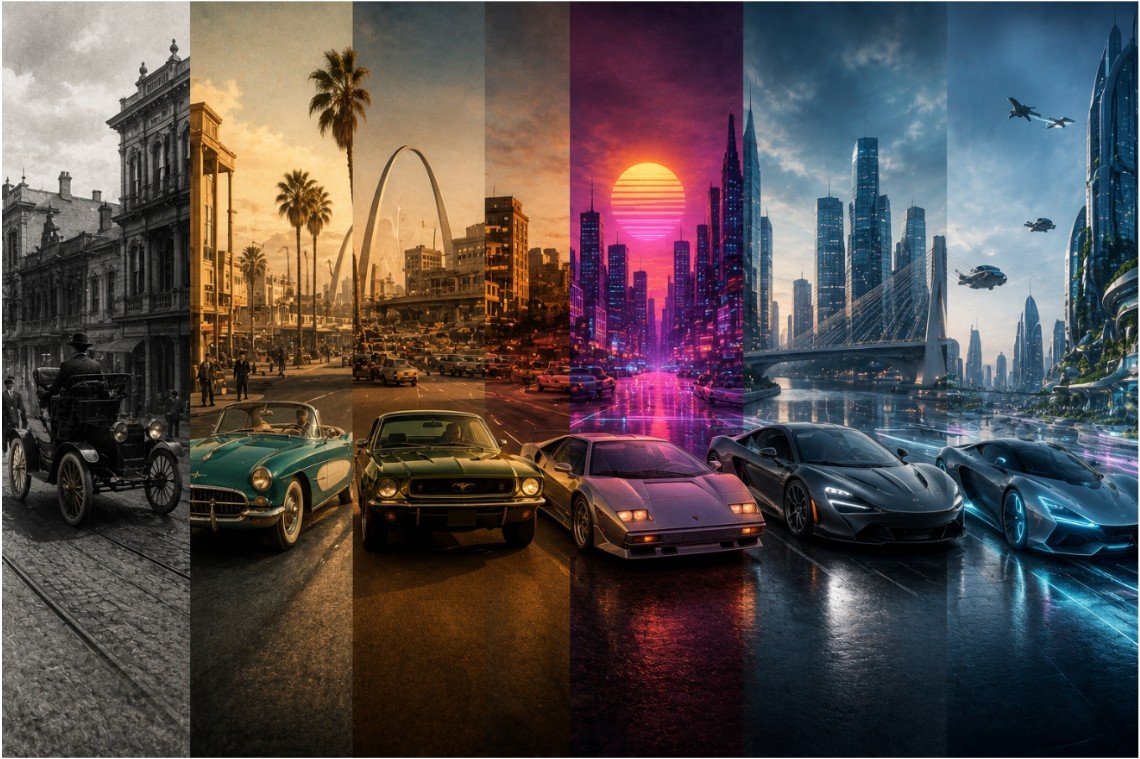

The most memorable cars are rarely defined by engineering alone. While performance, reliability, and innovation matter, truly iconic vehicles tend to represent something larger than themselves. They capture the mood, priorities, and aspirations of the period in which they were created.
Automotive history is filled with examples of cars that became cultural symbols because they reflected changing attitudes towards freedom, technology, luxury, rebellion, or progress. Their significance often extends well beyond transport. They become visual shorthand for entire decades.
This connection between cars and culture explains why certain vehicles remain instantly recognisable generations after they first appeared. Their design, presence, and public perception are deeply tied to the social and aesthetic identity of their era.
The 1950s: Optimism, Expansion, and the Rise of American Excess
Post-war automotive design reflected confidence and economic growth.
In the United States particularly, the 1950s saw cars become larger, brighter, and more expressive. Tailfins, chrome detailing, wraparound windscreens, and dramatic proportions mirrored the optimism of a society fascinated by aviation, space exploration, and industrial progress.
Cars during this period were designed to feel aspirational. Ownership symbolised freedom, mobility, and middle-class success. The styling itself communicated abundance.
At the same time, European manufacturers took a different approach. Smaller, efficient vehicles emerged in response to post-war rebuilding and urban practicality. Cars such as compact city vehicles reflected economic realities while still embodying modern design thinking.
The contrast demonstrated how automotive identity often mirrors regional social conditions as much as technological capability.
The 1960s and 1970s: Rebellion, Performance, and Cultural Change
By the 1960s, automotive culture became closely tied to youth identity and social transformation.
Muscle cars, lightweight sports cars, and racing-inspired road vehicles reflected an era increasingly associated with individuality and rebellion. Performance mattered not only for engineering reasons but because speed itself became culturally symbolic.
Meanwhile, European design houses produced some of the most enduring automotive silhouettes ever created. Low-slung grand tourers and minimalist sports cars aligned with broader shifts in fashion, architecture, and modernist design.
Cinema and television also strengthened the cultural power of vehicles during this period. Certain cars became inseparable from the personalities and lifestyles they represented on screen.
The oil crises of the 1970s eventually reshaped automotive priorities, pushing efficiency and practicality back into focus. Once again, the industry reflected broader economic and political realities.
The 1980s and 1990s: Technology and Globalisation
Automotive design in the 1980s reflected growing interest in technology and futurism.
Sharper edges, digital dashboards, aerodynamic styling, and electronically assisted systems became increasingly common. Cars from this era often appeared more technical and engineered than emotional, mirroring society’s fascination with emerging digital technology.
Japanese manufacturers rose to global prominence during this period by combining reliability, innovation, and performance. Their vehicles became symbols of precision engineering and modern manufacturing efficiency.
By the 1990s, globalisation had started influencing automotive culture more visibly. Cars were no longer shaped solely by regional tastes. International markets, shared platforms, and worldwide media exposure created more globally recognisable automotive trends.
At the enthusiast level, modification culture also became increasingly visible. Personalisation evolved into a significant part of automotive identity, particularly as younger drivers began treating cars as reflections of lifestyle and individuality rather than simple transport.
Modern Cars Reflect Digital Culture and Minimalism
Today’s automotive design reflects a very different cultural landscape.
Contemporary vehicles increasingly prioritise connectivity, sustainability, and visual simplicity. Electric cars, minimalist interiors, ambient lighting, and software-driven interfaces all reflect the influence of modern technology culture.
In many ways, current vehicle design borrows as much from consumer electronics and architecture as traditional automotive engineering. Clean surfaces, reduced physical controls, and seamless interfaces mirror wider trends in contemporary product design.
Social media has amplified this shift further. Cars are now constantly photographed and shared online, meaning visual identity plays a greater role than ever before. Distinctive lighting signatures, carefully designed interiors, and subtle customisation trends often gain cultural traction through digital platforms.
This has also changed how drivers approach personalisation. Increasingly, motorists focus on cohesive presentation rather than overt modification. Details such as lighting, wheel design, trim finishes, and subtle exterior enhancements contribute to a vehicle’s overall visual identity. For drivers interested in refined presentation, companies such as Number 1 Plates reflect the broader trend towards understated but intentional automotive styling.
Why Certain Cars Endure
Not every successful car becomes culturally iconic.
The vehicles that endure in public memory usually represent more than technical achievement. They capture a moment in time, expressing the ambitions, anxieties, and aesthetics of the societies that created them.
Some symbolise freedom and optimism. Others reflect economic caution, environmental awareness, or technological ambition. Their appeal lasts because they remain tied to collective cultural memory.
Importantly, people often remember how cars made them feel rather than what specifications they offered. Design, atmosphere, and emotional association frequently outlast raw performance figures.
This explains why older vehicles continue influencing fashion, film, photography, and contemporary design decades after production ends. They serve as visual records of changing social values.
Cars as Cultural Artefacts
Modern discussions around automotive design increasingly treat vehicles as cultural artefacts rather than purely mechanical objects.
Museums, galleries, and design exhibitions now regularly showcase significant cars alongside furniture, architecture, and industrial design pieces. The automotive world has become part of broader conversations around creativity, identity, and visual culture.
That shift reflects the unique position cars occupy in everyday life. Few objects combine engineering, craftsmanship, mobility, and personal expression so visibly.
As the industry moves further into an era defined by electrification, connectivity, and digital experiences, future iconic cars will likely continue reflecting the values of their time. Their significance may evolve, but the relationship between automotive design and cultural identity remains remarkably consistent.
The world’s most memorable cars endure not simply because they moved people physically, but because they captured the spirit of the world around them when it mattered most.