
Introduction
Seeing the Northern Lights, also known as the Aurora Borealis, is a dream for many travelers. The colorful lights dancing across the night sky create one of nature’s most unforgettable displays. However, spotting the aurora is not always easy because it depends on several changing conditions, including solar activity, weather, and cloud cover.
This is where a Northern Lights 30 minute forecast becomes extremely useful. Instead of relying on daily predictions, a 30-minute forecast provides near real-time updates that help you decide whether it’s worth heading outside right now.
Whether you’re visiting Iceland, Norway, Finland, Sweden, Canada, or Alaska, understanding how to read a short-term aurora forecast can significantly increase your chances of seeing the lights.
In this guide, you’ll learn everything about the Northern Lights 30-minute forecast, how it works, the best forecasting tools, and practical tips for making the most of every aurora-hunting opportunity.
What Is a Northern Lights 30 Minute Forecast?
A Northern Lights 30-minute forecast is a short-term prediction that estimates the likelihood of aurora activity during the next half hour.
Unlike long-range forecasts that estimate activity several days in advance, these forecasts use live space weather data to provide much more accurate predictions.
The forecast typically includes:
- Aurora activity level
- Expected brightness
- Cloud cover
- Solar wind speed
- Geomagnetic conditions
- Viewing probability
Since the aurora can appear and disappear within minutes, these updates are especially valuable for travelers who don’t want to spend hours waiting outside unnecessarily.
Why Is a 30 Minute Forecast More Accurate?
Space weather changes rapidly.
The Sun constantly releases streams of charged particles toward Earth. Sometimes these particles reach Earth sooner or with greater intensity than expected.
Because of this, forecasts made several days in advance cannot always predict exactly when the aurora will become visible.
A 30-minute forecast is based on live measurements from satellites monitoring solar activity.
These include:
- Solar wind speed
- Solar wind density
- Interplanetary magnetic field (IMF)
- Earth’s magnetic field response
Since these measurements update continuously, the forecast becomes much more reliable for immediate viewing.
How Does the Northern Lights Forecast Work?
Several satellites positioned between the Sun and Earth constantly monitor incoming solar particles.
When these particles reach Earth’s magnetic field, scientists calculate whether conditions are favorable for aurora formation.
The forecasting process generally follows these steps:
Step 1: Solar Observation
Satellites observe solar flares and coronal mass ejections (CMEs).
These events send energetic particles into space.
Step 2: Solar Wind Monitoring
Satellites measure:
- Wind speed
- Density
- Magnetic orientation
These values determine how strongly the particles will interact with Earth’s atmosphere.
Step 3: Geomagnetic Prediction
Scientists estimate the upcoming geomagnetic disturbance.
This is often represented by the KP Index, which ranges from 0 to 9.
Higher values generally mean stronger auroras.
Step 4: Cloud Forecast Integration
Even if aurora activity is strong, thick clouds can completely block the view.
Many forecasting websites combine:
- Aurora prediction
- Local weather
- Cloud cover maps
This provides a more useful forecast than aurora data alone.
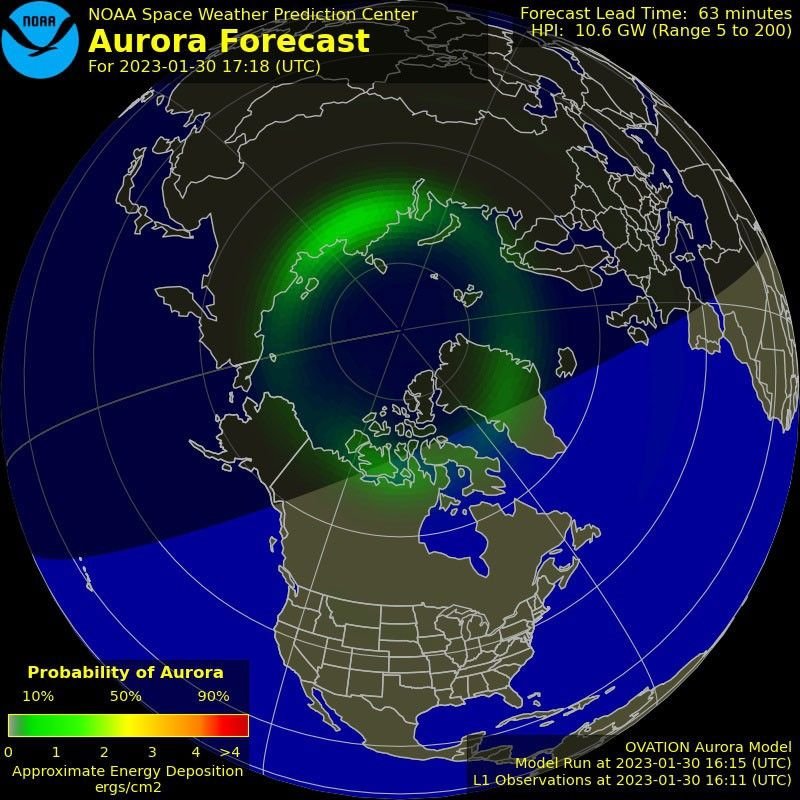
Understanding Aurora Forecast Maps
Many beginners find aurora maps confusing.
Fortunately, they’re quite simple once you know what each color represents.
Green Areas
Possible aurora visibility.
Often seen during moderate activity.
Yellow Areas
Higher probability of visible aurora.
Usually brighter displays.
Red Areas
Very strong geomagnetic activity.
Excellent chance of spectacular Northern Lights.
White or Gray Areas
Little or no aurora activity.
Cloud Overlay
Many forecast maps include cloud cover.
Remember:
A strong aurora behind thick clouds cannot be seen.
Always check both:
- Aurora forecast
- Weather forecast
Understanding the KP Index
The KP Index measures geomagnetic activity.
It ranges from 0 to 9.
KP 0–2
Very quiet conditions.
Auroras remain close to the Arctic Circle.
KP 3
Good viewing opportunities in northern Iceland, Norway, Finland, and Sweden.
KP 4
Brighter auroras become more common.
KP 5
Minor geomagnetic storm.
Auroras may become visible farther south.
KP 6–7
Strong geomagnetic storm.
Excellent viewing opportunities.
KP 8–9
Rare and spectacular.
Northern Lights may be visible in countries much farther south than usual.
However, remember that a high KP value alone does not guarantee visibility.
Cloud cover and darkness remain essential.
Factors That Affect the Northern Lights 30 Minute Forecast
Several natural factors determine whether you’ll actually see the aurora.
Solar Wind Speed
Fast-moving solar wind carries more charged particles.
Higher speeds generally increase aurora activity.
Magnetic Field Orientation (Bz)
One of the most important factors.
A southward-pointing magnetic field allows more solar particles to enter Earth’s atmosphere.
This often produces brighter auroras.
Cloud Cover
Clouds are the biggest reason people miss the Northern Lights.
Even during strong geomagnetic storms, heavy cloud cover blocks the display completely.
Light Pollution
City lights reduce visibility.
Travel to:
- National parks
- Rural areas
- Mountain viewpoints
- Coastal regions
for the best experience.
Moonlight
A bright full moon doesn’t stop the aurora.
However, faint displays become harder to see.
The darker the sky, the better.
Seasonal Darkness
The aurora occurs throughout the year.
But you need darkness to see it.
This is why most Northern Lights seasons run from:
- September
- October
- November
- December
- January
- February
- March
Best Websites and Apps for a Northern Lights 30 Minute Forecast
Many excellent forecasting services provide live aurora updates.
Here are some of the most popular.
1. NOAA Aurora Forecast
One of the world’s most trusted sources.
Features include:
- Live aurora oval
- Solar wind data
- KP index
- 30-minute prediction
Ideal for serious aurora hunters.
2. My Aurora Forecast
A popular smartphone app offering:
- Push notifications
- Cloud cover
- KP index
- Probability maps
- Live updates
Great for beginners.
3. Aurora Alerts
Provides:
- Real-time notifications
- Interactive maps
- Weather integration
Perfect if you don’t want to constantly monitor forecasts yourself.
4. Space Weather Live
Excellent for users interested in:
- Solar flares
- Coronal mass ejections
- Solar wind
- Geomagnetic storms
Offers detailed scientific information while remaining accessible.
5. Ventusky
Although primarily a weather app, Ventusky offers outstanding cloud forecasts, helping you determine whether clear skies will coincide with aurora activity.
Tips for Using a 30 Minute Aurora Forecast
Checking the forecast is only the first step. These practical tips can greatly improve your chances of seeing the Northern Lights.
Monitor Updates Frequently
Aurora conditions can change quickly. Refresh the forecast every 15–30 minutes, especially during active geomagnetic periods.
Combine Aurora and Weather Forecasts
A strong aurora won’t be visible through thick clouds. Always compare aurora predictions with local cloud cover maps.
Be Ready to Move
If nearby areas have clearer skies, be prepared to drive a short distance. Flexibility often makes the difference between seeing the aurora and missing it.
Dress for the Weather
Aurora viewing often involves standing outside in freezing temperatures. Wear insulated clothing, gloves, a warm hat, and waterproof boots.
Let Your Eyes Adjust
Avoid bright phone screens or flashlights for at least 15–20 minutes. Your eyes will become more sensitive to faint auroras.
Stay Patient
Even with an excellent forecast, the Northern Lights can brighten and fade several times in a single night. Give yourself enough time rather than leaving after just a few minutes.
Common Mistakes to Avoid
Many first-time aurora hunters make the same mistakes. Avoid these common pitfalls to improve your chances of success.
- Relying only on the KP Index without checking cloud cover.
- Watching from cities with heavy light pollution.
- Expecting the aurora to appear exactly at the predicted time.
- Ignoring short-term forecast updates.
- Leaving too early if the lights aren’t immediately visible.
- Visiting during summer when there isn’t enough darkness.
Best Places to Use a Northern Lights 30 Minute Forecast
A 30-minute aurora forecast is most useful in destinations where the Northern Lights appear frequently. Since weather conditions can change rapidly, checking live forecasts while traveling helps you decide the best time and location to head outside.
Iceland
Iceland is one of the world’s top destinations for aurora viewing. The country offers:
- Wide open landscapes
- Minimal light pollution
- Easy road access
- Frequent aurora activity
Popular viewing spots include:
- Thingvellir National Park
- Vik
- Snæfellsnes Peninsula
- Jökulsárlón Glacier Lagoon
Because Iceland’s weather changes quickly, a 30-minute forecast is especially valuable.
Norway
Northern Norway enjoys one of the longest aurora seasons in the world.
Top locations include:
- Tromsø
- Alta
- Senja Island
- Lofoten Islands
Many guided tours rely on short-term forecasts to find clear skies, sometimes driving several hours to avoid cloud cover.
Finland
Finnish Lapland provides peaceful forests, frozen lakes, and cozy glass igloos for aurora viewing.
Popular destinations include:
- Rovaniemi
- Saariselkä
- Levi
- Inari
Checking a live forecast before leaving your accommodation can save time and improve your chances of success.
Sweden
Swedish Lapland is another excellent choice.
Best places include:
- Abisko
- Kiruna
- Jukkasjärvi
Abisko is famous for its “Blue Hole,” an area that often enjoys clear skies even when surrounding regions are cloudy.
Canada
Northern Canada experiences spectacular aurora displays throughout winter.
Excellent locations include:
- Yellowknife
- Whitehorse
- Churchill
Because these regions experience changing weather, 30-minute forecasts are extremely useful.
Alaska
Alaska is one of North America’s premier aurora destinations.
Best viewing areas include:
- Fairbanks
- Denali National Park
- Coldfoot
- Chena Hot Springs
A short-term forecast helps visitors decide whether to stay at their hotel or head out for viewing.
How to Increase Your Chances of Seeing the Northern Lights
Even with an excellent forecast, a few smart strategies can greatly improve your experience.
Choose Dark Locations
Move away from cities and bright streetlights. Rural areas provide much darker skies.
Watch Between 10 PM and 2 AM
Although the aurora can appear at any time during darkness, activity often peaks around midnight.
Stay for Several Hours
Auroras can suddenly brighten after long quiet periods. Patience often pays off.
Use a Camera
Modern smartphones and DSLR cameras can capture colors that may appear faint to the naked eye.
Check Forecasts Repeatedly
Don’t rely on a forecast from earlier in the day. Conditions may change dramatically within a few hours.
Why Weather Matters as Much as Solar Activity
Many people focus only on aurora strength, but weather is equally important.
For example:
- Strong aurora + heavy clouds = Nothing visible.
- Moderate aurora + perfectly clear skies = Amazing viewing.
This is why experienced photographers always check both:
- Aurora forecast
- Cloud cover forecast
The best viewing occurs when both conditions align.
Can You Trust a 30 Minute Forecast?
Yes—but with realistic expectations.
A 30-minute forecast is much more accurate than a forecast made several days in advance because it relies on near real-time space weather data.
However, no forecast can guarantee a visible aurora because natural conditions change quickly.
Think of it like a weather forecast. It greatly improves your chances of being in the right place at the right time, but nature can still be unpredictable.
Frequently Asked Questions (FAQs)
What is a Northern Lights 30 minute forecast?
It is a short-term prediction that estimates aurora activity over the next 30 minutes using live solar wind and geomagnetic data.
Is a 30-minute forecast accurate?
It is generally one of the most reliable ways to predict immediate aurora activity, although weather and cloud cover still affect visibility.
What KP index is best for seeing the Northern Lights?
A KP index of 3 or higher is often sufficient in high-latitude destinations like Iceland or northern Norway. Lower-latitude regions usually require KP 5 or above.
Can I see the aurora if it’s cloudy?
No. Thick clouds block the Northern Lights completely, even during strong geomagnetic storms.
Which app provides the best live aurora forecast?
Popular options include:
- NOAA Aurora Forecast
- My Aurora Forecast
- Aurora Alerts
- Space Weather Live
Each provides real-time updates and helpful notifications.
What time do the Northern Lights usually appear?
They are most commonly visible between 10:00 PM and 2:00 AM, although they can occur anytime during dark hours.
Does a full moon stop the aurora?
No. Bright auroras remain visible during a full moon, but faint displays may be harder to see.
Can the forecast change quickly?
Yes. Solar wind conditions can change within minutes, which is why frequent updates are recommended.
Expert Tips for Aurora Hunters
If you’re serious about seeing the Northern Lights, keep these expert recommendations in mind:
- Monitor forecasts every 20–30 minutes.
- Learn to read cloud cover maps.
- Have multiple viewing locations planned.
- Charge camera batteries fully, as cold weather drains them quickly.
- Bring a tripod for long-exposure photography.
- Wear layered clothing to stay warm during extended viewing sessions.
- Be patient—some of the best displays happen after hours of waiting.
- Keep your phone’s brightness low to preserve your night vision.
READ MORE:
Final Thoughts
A Northern Lights 30 minute forecast is one of the most valuable tools for anyone hoping to witness the Aurora Borealis. By combining live space weather data with local cloud cover information, these forecasts provide timely guidance that can dramatically improve your chances of seeing one of nature’s greatest spectacles.
While no prediction can guarantee an aurora display, checking short-term forecasts, choosing a dark location, and remaining patient will give you the best possible opportunity. Whether you’re traveling to Iceland, Norway, Finland, Sweden, Canada, or Alaska, using a reliable 30-minute forecast can turn an ordinary night into an unforgettable experience beneath glowing green, purple, and pink skies.
Conclusion
The Northern Lights are a breathtaking natural phenomenon, and a 30-minute forecast helps you make the most of every opportunity to see them. Instead of relying on broad daily predictions, near real-time forecasts provide the latest information on aurora activity, cloud cover, and geomagnetic conditions. By staying informed, remaining flexible, and choosing the right location, you’ll significantly increase your chances of experiencing the magic of the Aurora Borealis.